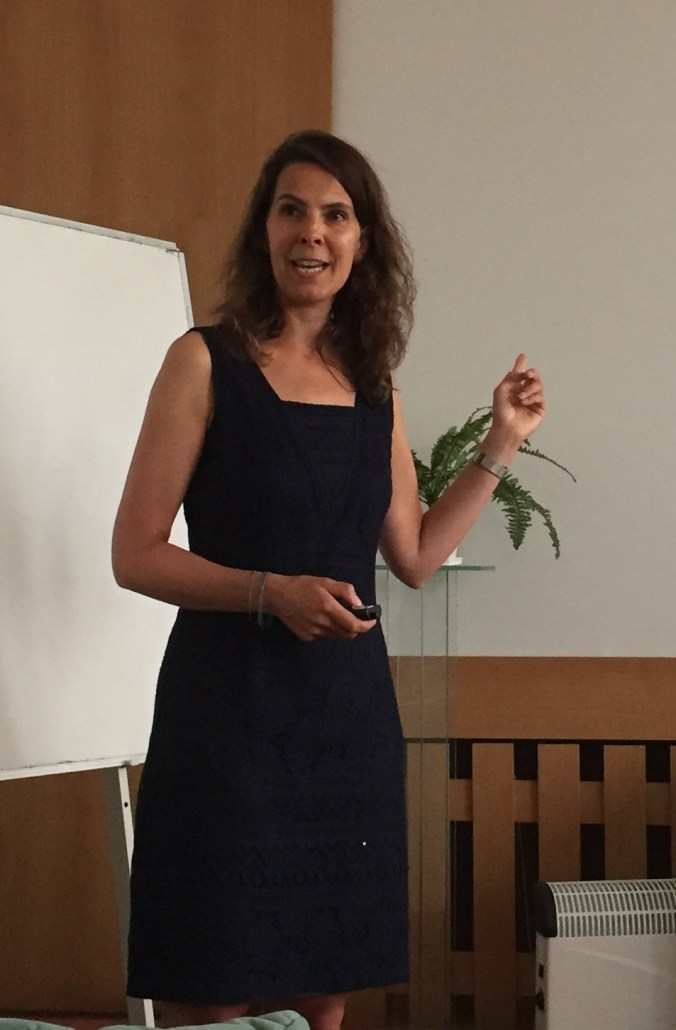
Our department hosts two international students, Laura Jansen and Jaroslava Voracova, working on their thesis exploring eating behaviour of adolescents, stimulating inspiring discussion within our team.

Our department hosts in May and June 2018 two international students, Laura Jansen and Jaroslava Voracova, working on their thesis exploring eating behaviour of adolescents, stimulating inspiring discussion within our team.

Laura Jansen is a student of Global Health master study programe in Maastricht University, The Netherlands, and her thesis on influence of peers’, parental & classmates’ support on eating behavior and body image among Slovak adolescents is supervised by Eva Pilot.

Jaroslava Voracova is a student of Kinantropology PhD study program in Faculty of Physical Culture, Palacky University in Olomouc, Czech Republic, and her PhD thesis on trends in eating behaviour among Czech adolescents is supervised by Erik Sigmund.
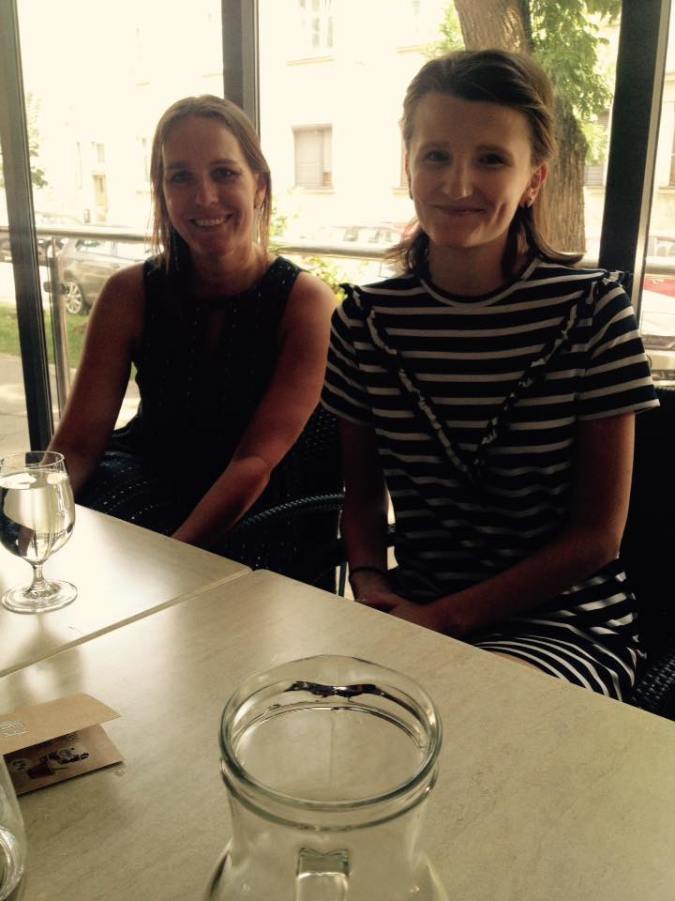
Laura and Jarka stay

Our colleague Ivana Skoumalova passed her dissertation exam with research exploring how health literacy profiles could be used to increase efficiency and effectiveness of chronic kidney disease management

Our colleague Ivana Skoumalova passed her dissertation exam on the 20th of June 2018 with research exploring how health literacy profiles could be used to increase efficiency and effectiveness of chronic kidney disease management. Congratulations!!!

Iva S minimovka


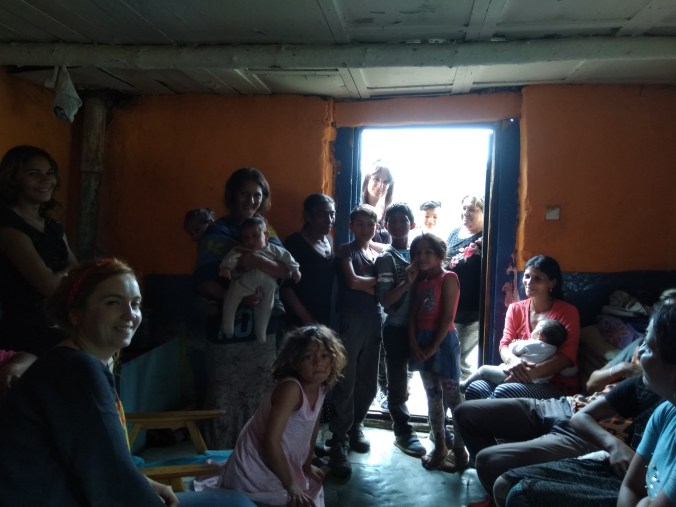
Based on contract between UPJS and Healthy Regions Andrej Belak and Daniela Filakovska are currently conducting Health needs assesment of the marginalized Roma communities

Based on contract between UPJS and Healthy Regions (contributory organization of the Ministry of Health)  Andrej Belak and  Daniela Filakovska are currently conducting Health needs assesment of the marginalized Roma communities (MRC). In the first phase, which started in June in first marginalizad Roma community, they discuss health and social determinants of health in MRC not only with relevant stakeholders (social workers, teachers, doctors) but also with Roma families.

IMG_20180607_155715


Andrej Belak and Daniela Filakovska invited for work meetings by the Office of the Plenipotentiary of the Government of the Slovak Republic for Roma Communities

Andrej Belak and  Daniela Filakovska were invited by the Office of the Plenipotentiary of the Government of the Slovak Republic for Roma Communities to join thematic work group and participate on revision of the National Roma integration strategy in the area of Health. They also attended the meeting of work group whose aim is professional support and assistance in the implementation of a partial task of the National Project Healthy Communities (HC), which is the pilot introduction of the position of health mediator in hospital environments. We discussed the process of implementation and our cooperation on evaluation of this project. Both meeting were organized in Bratislava on tthe 11th and 12th of June.

How can health psychology contribute to the quality of life of dialysed patients?

Health psychology examines psychological, behavioral and cultural factors or processes related to health, illness or health care. Dialyzed patients are one of the target research groups at LF UPJŠ aiming at improving the efficiency of the provided health services as well as expanding their offer for effective intervention programs.

Researchers from several departments, Institute of Health Psychology, Institute of Clinical Biochemistry, Institute of Physical Education and Sport have taken advantage of their interdisciplinary team, working with foreign workplaces in the Netherlands and Australia, as well as working with the network of dialysis centers FMC – dialysis service, s.r.o. This project is one of world-class pioneering projects that aim at a deeper understanding of the implications of health literacy on various aspects of the health of patients with chronic illness. On the Slovak scale, this is a unique initiative with such a wide range.

More information might be found here.

Prof. Debbie Jaarsma from University of Groningen, Netherlands delivered the lecture “How curriculum innovations may lead to better doctors and better healthcare and vice versa”

Prof. Debbie Jaarsma from University Medical Centre in Groningen, University of Groningen, Netherlands delivered on 14th of June 2018 as a part of the IMPACCT project meeting organized in Kosice by Department of Health Psychology the lecture “How curriculum innovations may lead to better doctors and better healthcare and vice versa” and discuss this issue with academic community of Medical Faculty Pavol Jozef Safarik University in Kosice.

Debbie Jaarsma

IMPACCT project meeting was organized by our team in Kosice with the representatives from Netherlands, Italy, Ireland and Germany attending

This week (13.-15.6. 2018) IMPACCT project meeting was organized by our team in Kosice with the representatives from Netherlands, Italy, Ireland and Germany.

Event was aimed to provide necessary knowledge for the project members to enable them to formulate the relevant topics and content of learning units related to health literacy education of medical and nursing students in Europe. Learning units and their content was further discussed and elaborated. Next similar event will focus on finalizing first learning units out of twenty formulated now.

IMPACCT project team organized stakeholders meeting in Kosice

According to various stakeholders consulted during IMPACCT project meeting with stakeholders held in Kosice on 14th of June, Health Literacy education is highly needed in medical curricula. Valuable information was provided for further development of the learning units.

Diversity in the content of curricula was recognized as a relevant challenge to take into consideration for the development and implementation of the learning units. Therefore, IMPACCT team proposed a supermarket model, which means that educators can select different learning units relevant for their setting or integrate components of learning units to existing education. Furthermore, diversity is a main theme throughout the different learning units as it also impacts on the patient-professional interaction.