35th annual conference of the European Health Psychology Society – Health psychology approaches to tackle global challenges – is being held online and we are there!

We are honoured and delighted to be once again part of the 35th annual conference of the European Health Psychology Society from the 23rd – 27th of August, 2021 with a theme Health psychology approaches to tackle global challenges.

Our colleagues Zuzana Dankulincova, Jaroslava Kopcakova, Shoshana Chovan, Simona Horanicova and Viktoryia Karchynskaya were invited to share their knowledge via one oral presentation and three poster presentations on latest findings from Care4Youth, HBSC and RomaReach studies.

First GoPA! (the Global Observatory for Physical Activity) EURO & AFRO regional webinar

Our collegue Jaroslava Kopcakova as a country contact for Slovakia attended a special first GoPA! EURO & AFRO regional webinar on 11th August 2021 which presented a policy brief developed for each region with data from the Second Set of Country Cards.  GoPA! team tried to identify specific areas of work and possible collaboration between representatives of the region to increase local capacity to promote physical activity. This webinar was dedicated only for EURO & AFRO Country Contacts and Country Card teams.Discussion were moderated Prof. Andrea Ramirez from Universidad de los Andes, Colombia;  Prof. Pedro Hallal from Federal University of Pelotas, Brazil;  Prof Michael Pratt, University of California San Diego, United States.

More information: https://new.globalphysicalactivityobservatory.com/

Dissertation by our colleague Lucia Bosáková successfully defended at the University of Groningen. Congratulations!!!

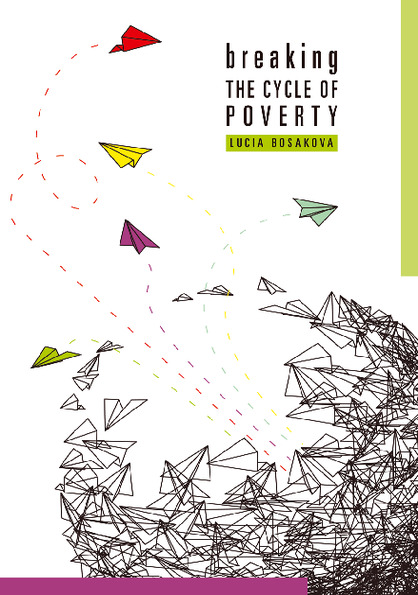
On the 7th of July 2021 our colleague, Lucia Bosáková have been awarded a PhD degree at the University of Groningen during a defence and PhD ceremony held online between the University of Groningen and Pavol Jozef Safarik University in Kosice. The thesis entitled “Breaking the cycle of poverty: routes to counteract intergenerational transmission of socioeconomic health differences” was defended in the presence of the College of Deans and the PhD Examining Committee. More information about defence ceremony might be found here.

Many people are still trapped in the cycle of poverty in Europe, from generation to next generation. This is reflected in the large health inequalities, which are a persisting major public health concern that persists despite numerous efforts to reduce it. This thesis is focused on socioeconomic differences in health, with education and employability as major means to combat the intergenerational transmission of poverty. It contributes to the understanding of this the cycle of poverty, but also explores ways to break it. Using the data from Slovakia, it demonstrates how health inequalities are manifest, what their major determinants are, what their impact is, and how we could tackle them. This thesis supports the evidence that poor socioeconomic conditions pose health risks. It points that education is a key mechanism. And it shows that school satisfaction has an important role to make an educational trajectory successful, with some groups at risk. In particular boys, children from low affluence families, children with learning difficulties and with a disrupted social context, deserve extra attention. This thesis also adds evidence on ways to break the cycle of poverty. It shows room for strengthening of social policies focused on deprived families and communities in general, based on a participatory approach. And it shows the importance of improving the employability of disadvantaged workers and of developing public-private partnerships to provide work for them and to support deprived communities. This thesis can greatly add to public health and to public prosperity in Central Europe and other parts of the world.

Dissertation: http://hdl.handle.net/(…)e2-a6b1-d1c0d00cd5b2

Our colleague Jaroslava Kopcakova contributed to the concept of the development of youth work in Košice

The concept of the development of youth work in the territory of the Košice self-governing region for the years 2021 – 2025 (2030) was approved by the council of the Košice self-governing region. We are glad that consultations with colleagues and experts from Department of Health Psychology and Research Methodology and also data within the HBSC study in Slovakia form the basic pillars of this concept. 

HBSC spring network meeting hosted online!

From 10th to 11th June 2021 our colleagues  attended the HBSC Spring network meeting which was hosted online.

This meeting brought together HBSC members from across the globe.  At this meeting, we discussed our plans for upcoming round of data collection. This is a critical stage of the survey cycle which is entirely dependent on the collective efforts and engagement of the network as a whole.

Our team working on the RomaREACH project had an inspiring meeting with experts from different fields who share our interest in early childhood in marginalized Roma communities

At the end of March, we had a fruitful discussion on the results of the Concept mapping study we conducted on measures that could improve healthy early childhood development in children from marginalized Roma communities. The meeting gave us hope that the measures that need to be implemented with the goal to have equally healthy and happy children who will be able to fulfill their potential are already known and that cooperation is possible. 

Working Group 3 of the COST action meeting of THE EUROPEAN RESEARCHERS’ NETWORK WORKING ON SECOND VICTIMS was held online

On February 4th and 5th, the meeting of Working Group 3 of the COST action, CA19113, lead by Paulo Sousa, was held on 4 and 5 February. Despite the current situation in Europe it was attended by about 18 people, including the Chair of the action, José Joaquín Mira, who participate as a guest.

The participants who came from different European countries,Bosnia, Poland, Croatia, Sweden, Slovakia, Croatia, Iceland, Norway, Finland, Portugal (host country) and Spain, joined the meeting through Zoom platform.

This initial approach promoted:

  • First contact meeting with members
  • Discussion of the ideas of the international meeting
  • Presentation of the Google folder for file sharing among members
  • Discussing terms for second victims
  • Discussing metrics for evaluation

It should be noted that all participants were resolute, with high participation and a diversity of points of view between different countries for this action COST . Besides this was an activity with  high participation, the participation rate was about 75% of the total amount of working group members.

Both days were absolutely fruitful, the participants had a discussion about the strategies to be followed, a platform to be connected through Google Drive was implemented and in the late afternoon the attendees were divided into two small groups: one to talk about the term “second victims” and another group to talk about the evaluation metrics to be taken. At the end the discussion about the Training Manual and Case Study, both deliverables expected, ended with the intention of link them.

More information here: https://cost-ernst.eu/news/working-group-3-first-meeting/

Brand new set of Country Cards are avaliable!

The Country Cards are critical to make the case for physical activity at the national level and can be used by governments, researchers, advocates, and society. The Country cards belong to The Global Observatory for Physical Activity- GoPA! what is a global organization consisting of physical activity researchers, epidemiologists, public health policy makers and practitioners that catalogues and analyzes global data on physical activity and health.

Let´s introduce a Slovak and English versions of the Country Card of Slovak Republic. Other Country Cards are availaible here: http://new.globalphysicalactivityobservatory.com/countrycards/