Online kick-off meeting of Erasmus+ Sport project “Physical activity-related injuries prevention in adolescents (PARIPRE)”

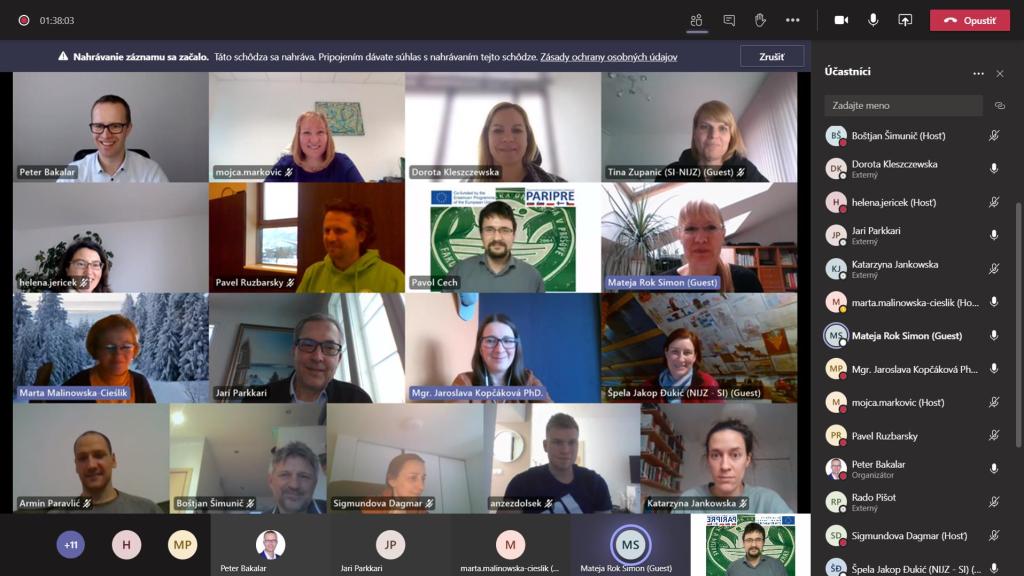
On behalf of the UPJŠ, our colleague Jaroslava Kopcakova attended the first online kick-off meeting on Friday, 29th January 2021 of Erasmus+ Sport project “Physical activity-related injuries prevention in adolescents (PARIPRE)”. Great consortium of 8 organizations from 5 European countries (Slovakia, Czechia, Slovenia, Finland and Poland) working together on physical activity-related injuries prevention in adolescents. The project is focused on physical activity-related injuries (PARI) prevention as an integral component of physical activity promotion in adolescents. To do so, we will use the structure of PARI prevention set by Centres for Disease Control and Prevention (the details can be found here: https://ec.europa.eu/programmes/erasmus-plus/projects/eplus-project-details/#project/622594-EPP-1-2020-1-SK-SPO-SCP).
Launch of the Second Set of GoPA! Physical Activity Country Cards

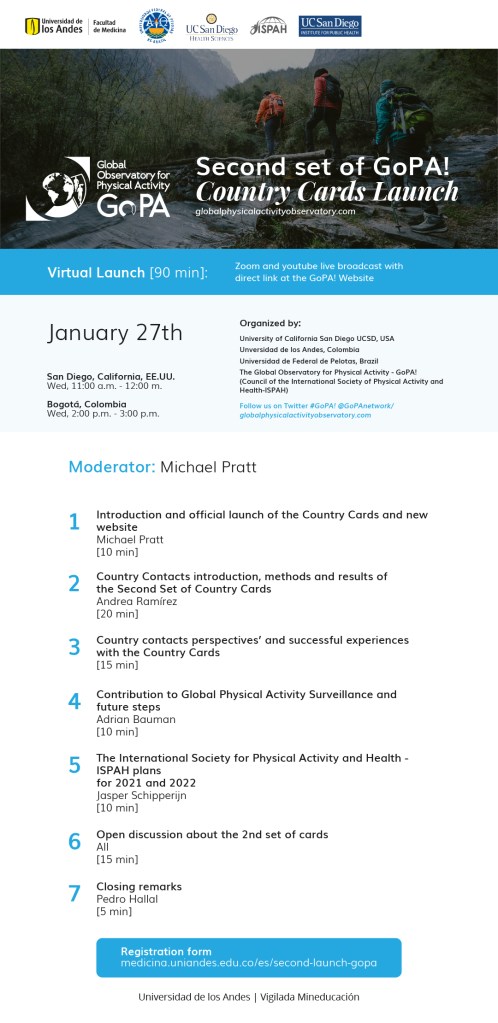
The Global Observatory for Physical Activity has been working on the Second Set of Country Cards since June 2019 and engaged with 217 countries to improve physical activity worldwide through this initiative, which aims to monitor the progress of the field in three areas: surveillance, research and policy.

We are pleased to tell you that the Global Observatory for Physical Activity has officially launched the second set of country cards at updated and more user friendly webpage: http://www.globalphysicalactivityobservatory.com/
and https://medicina.uniandes.edu.co/es/second-launch-gopa

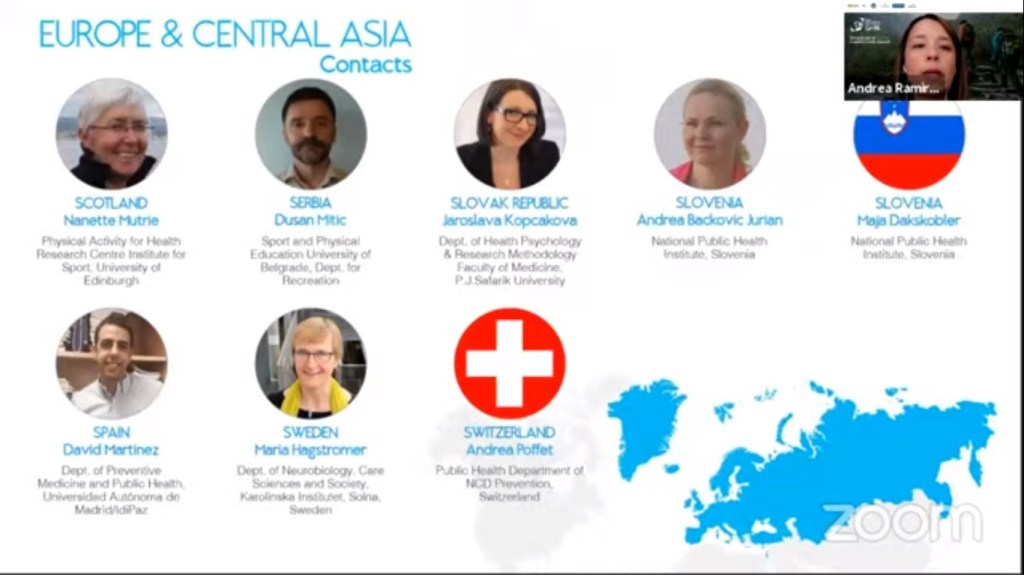
The launch includes the approved cards from 162 countries with up to date research, surveillance, and policy indicators. These Country Cards are the Second Set of Physical Activity Country Cards. These cards are available in English and in 29 of the original languages of participating countries (via our colleague Jaroslava Kopčáková, country contact for Slovakia also in Slovak language).

Visit a new website www.cost-ernst.eu and learn about Second victims in healthcare

This website aims to communicate news and activities of the ERNST – COST ACTION CA19113: THE EUROPEAN RESEARCHERS’ NETWORK WORKING ON SECOND VICTIMS. Learn more about the action, its aim, and objectives here: https://cost-ernst.eu/about/

Our colleagues, prof. Andrea Madarasova Geckova and Ivana Skoumalova, MSc. are participating in the following working groups of the action:

WG1 / Network promotion (Networking, management, dissemination issues, assessment of work plan and sustainability)
WG3 / Making it happen (Make feasible interventions, train professionals, and implement cultural, legal, or educational changes)
WG4 / Facilitators and barriers (Explore and facilitate alternatives to overcome taboos, or obstacles facilitating collaboration among stakeholders)

Learn more about the working groups, its objectives, and deliverables here: https://cost-ernst.eu/structure/working-groups/

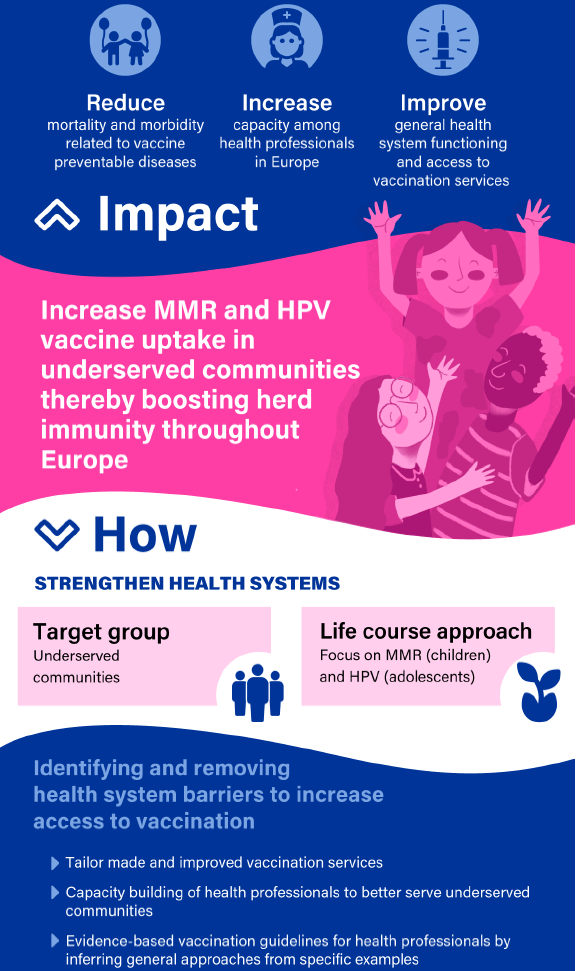
Our Horizon 2020 proposal “RIVER-EU: Reducing Inequalities in Vaccine uptake in the European Region – Engaging Underserved communities” supported by the European Commission!!!

We are happy to be a part of it as members of the consortium consisting of 14 institutions from 10 European and associated countries. Our university research team consisting of experts in field of epidemiology, infectious disease, health psychology, and public health Prof. Monika Halanova, dr. Ingrid Urbancikova, Prof. Andrea Madarasova Geckova and dr. Daniela Filakovska will be lead by prof. Pavol Jarčuška supported by university project centre in implementation of this project.

On behalf of the UPJŠ, our colleagues Andrea Madarasova Geckova and Daniela Filakovska attended the first online consortium meeting held on the 6th of January where the agenda for the upcoming period was discussed. The aim of this project is to 1) increase understanding of the determinants of low vaccine uptake in specific contexts; 2) develop strategies to increase vaccination rates within these contexts; and 3) develop a series of recommendations that national and regional public health authorities could implement in order to increase vaccine coverage.