Andrej Belak is attending European Platform for Roma inclusion: Health and housing inequalities endured by Roma in Brussels

Andrej Belak is on the 8th and 9th of October 2018 attending  European Platform for Roma inclusion: Health and housing inequalities endured by Roma in Brussels as an invited expert from the academia.

This gathering of policy makers and other stakeholders from Europe provides for an opportunity to discuss on how to advance the efforts in social and economic inclusion of the Roma people.

Thematic focus

The thematic focus of this 12th Platform meeting will be on inequalities endured by Roma in the areas of health and housing, two out of four crucial areas of the EU Framework for National Roma Integration Strategies up to 2020. All Member States have committed to this framework which was established in 2011 with a view to closing the gaps between marginalised Roma communities and the general population.

Workshops and political debate

Two parallel workshops devoted to Roma inequalities in the areas of health and housing will take place on 9th October, in the morning.  For that purpose, the EU umbrella Roma and pro Roma NGOs have prepared a background document.

The workshops will be followed by two exchange dialogues with various stakeholders, representing EU institutions, Member State’s governments, Roma NGOs, academia, etc.

Information about the agenda could be found here.

Life streaming of the event is available here.
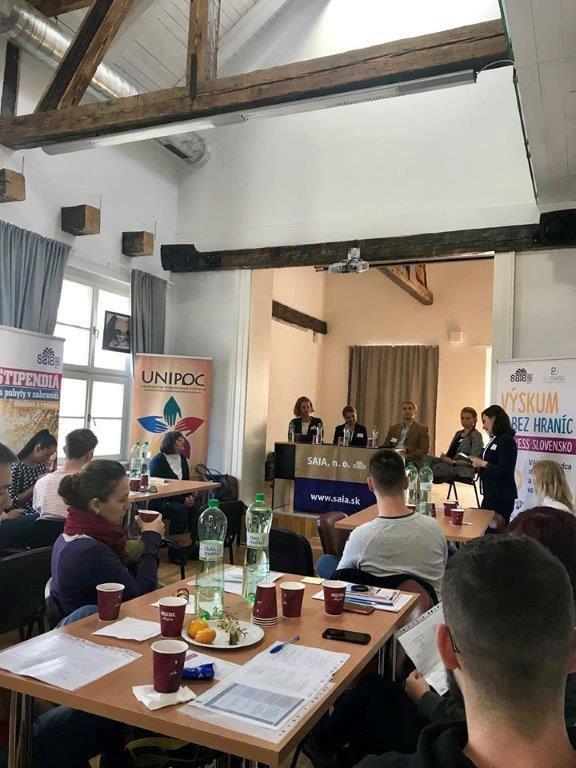
EUROAXESS Slovakia in collaboration with Safarik University and Association of PhD students organize workshop for PhD students How to start research career and our colleague prof. Andrea Madarasova Geckova joined the panel discussion on research career with young researchers

EUROAXESS Slovakia in collaboration with Safarik University and Association of PhD students organized on the 4th October 2018 workshop for PhD students How to start research career and our colleague prof. Andrea Madarasova Geckova joined the panel discussion on research career with young researchers.

More information could be found here.

AMG_Career day

New WHO/HBSC report: Trends and inequalities in adolescent drinking behaviours

The HBSC/WHO report, ‘Adolescent alcohol-related behaviours: trends and inequalities in the WHO European Region, 2002–2014‘ was published this morning in English and Russian.

The Health Behaviour in School-aged Children (HBSC) survey is a WHO collaborative cross-national study that monitors the health behaviours, health outcomes and social environments of boys and girls aged 11, 13 and 15 years every four years. HBSC has collected international data on adolescent health, including alcohol consumption and drinking behaviours, for over 30 years, allowing prevalence to be compared across countries and over time.

This report presents the latest trends in alcohol consumption and drinking behaviours among 15-year-olds across the WHO European Region, taken from the HBSC study. It highlights gender and socioeconomic inequalities across the Region. Trends have previously been reported separately, but this report brings together for the first time a broader range of HBSC data on adolescent alcohol consumption and drinking behaviours to review the latest evidence and highlight differences in alcohol use by gender, socioeconomic position and geographic subregion.

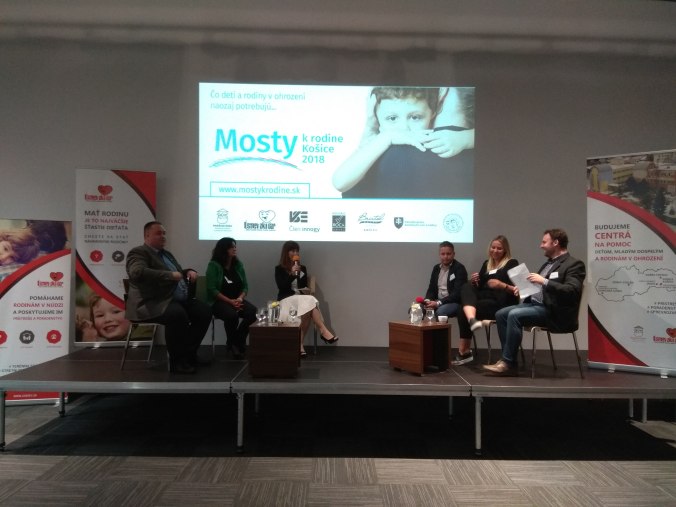
Our team took part in the conference “Bridges towards families” organized in Košice by non-profit organization “Úsmev ako dar” as a part of activities within Care4Youth project

Our colleagues, Daniela Fiľakovská, Zuzana Dankulincová and Jaroslava Macková, on September 25th 2018, took part in the day-long conference “Bridges towards families” in Košice. Aim was to establish contacts with care providers for children with emotional and behavioral problems within the Care4Youth project. Event was organized by the non-profit organization “Úsmev ako dar”, which is working with us on the Care4Youth project.

IMG_20180925_103709

Our colleague Daniela Filakovska was involved in preparation and actively participated at disscussion “Discrimination and social exclusion of Roma” which was held at the international festival SPLINE in Košice

Our colleague Daniela Filakovska was involved in preparation and actively participated at disscussion “Discrimination and social exclusion of Roma” which was held at the international festival SPLINE. The aim of this festival is to create currently absent communicational platform for topics that divide society (e.g. racism, homophobia, refugee crises, xenophobia). Together with Jarmila Vanova, Marcela Adamova and Michal Sivak she opened the debate on the diversity of forms and places in which discrimination occur and how it affect those who are subjected to it. More information could be found here

https://www.facebook.com/plugins/video.php?href=https%3A%2F%2Fwww.facebook.com%2Fsplinefestival%2Fvideos%2F266978537484035%2F&show_text=0&width=560

spline

Using the opportunity offered by our colleagues from Groningen, prof. Madarasová Gecková and prof. Ivo Čermák join a seminare with students of Global Health learning community within University Medical Centre Groningen/ University of Groningen

Job shadowing is an inspiring way how to learn from others to do things better.

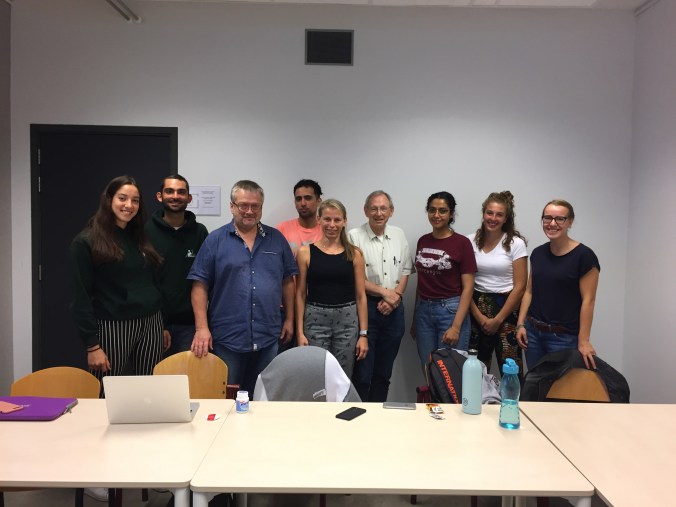
Using the opportunity offered by our colleagues from Groningen,  prof. Madarasová Gecková and prof. Ivo Čermák (Masaryk University Brno, Czech republic) join a seminare on the 20th of September with students of Global Health learning community within University Medical Centre Groninge/ University of Groningen discussing eradication of poliomyelities and what role the trust to medical services might play in various countries in implementation of vaccination.

Global Health vyuka Groningen

Dissertation by our colleague Petr Baďura successfully defended at the University of Groningen. Congratulations!!!

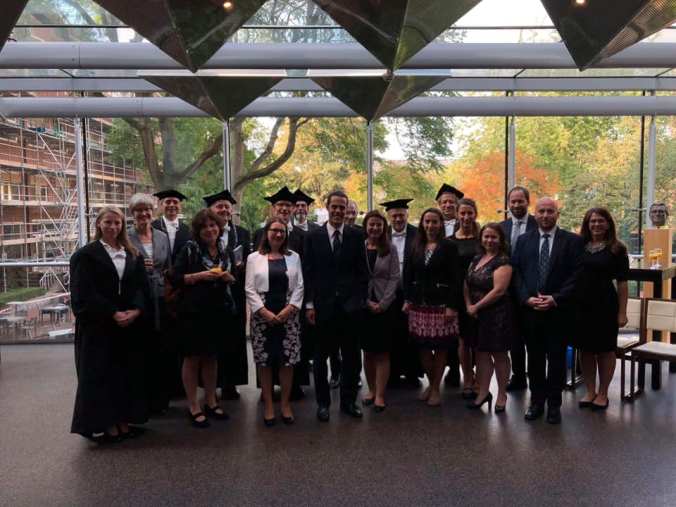
On the 19th of September 2018 our colleague, Petr Baďura, have been awarded a PhD degree at the University of Groningen during a defence and PhD ceremony held in the University of Groningen’s auditorium. The thesis entitled “Physical activity, screen-based activities and their potential determinants: Active living during adolescence” was defended in the presence of the College of Deans and the PhD Examining Committee. More information about defence ceremony might be found here.

42129575_10156493251964627_2655355520637992960_n

Leisure time represents a large portion of adolescents’ time budgets, and the ways it is spent substantially determines their lifestyle and health-related behaviours. Most research on leisure, and organized activities in particular, has thus far been conducted in the USA and Canada. Studies from European countries on this topic are scarce. Therefore, this thesis aimed to examine the associations of adolescents’ participation in organized leisure-time activities (OLTA) and unstructured activities (UA) with health- and school-related outcomes, using a large representative sample of Czech adolescents who participated in the international Health Behaviour in School-aged Children (HBSC) study. OLTA participants were more likely to report enhanced physical and mental health and good school functioning than non-participants. Moreover, participation in OLTA was associated with lower levels of substance use, especially in girls. Otherwise, the associations mostly held for both genders across all age categories (11-, 13- and 15-year-olds) surveyed, even after adjustment for socioeconomic status. However, they varied somewhat by pattern of OLTA participation; e.g. we observed differences in health- and school-related outcomes, with outcomes being best for those participating in the arts. Regarding UA, we found that those involved in unsupervised UA had higher rates of adverse health-behaviours and poor school performance than those who were not involved in such UA. Furthermore, those engaging only in UA were more likely to partake in adverse health behaviours and to do worse at school than those who participated in any OLTA concurrently.

Dissertation by our colleague Jaroslava Kopčáková successfully defended at the University of Groningen. Congratulations!!!

On the 19th of September 2018 our colleague, Jaroslava Kopčáková, have been awarded a PhD degree at the University of Groningen during a defence and PhD ceremony held in the University of Groningen’s auditorium. The thesis entitled “Physical activity, screen-based activities and their potential determinants: Active living during adolescence” was defended in the presence of the College of Deans and the PhD Examining Committee. More information about defence ceremony might be found here.

Healthy active living during adolescence supports optimal health and growth of the individual. Physical activity and screen-based activities are important aspects of health behaviour of adolescents. We found that adolescents reported relatively little physical activity and rather many screen-based activities. However, both types of behaviour are not merely opposite to each other, i.e. at the same time adolescents can be physically active and still have a high rate of screen-based activities. Physical activity and screen-based activities in adolescence were associated with potential determinants on several levels based on the socio-ecological model. This started with the intrapersonal level (gender-specific role of body image and motives for physical activity), next the perceived environment (positive influence of the perception of the environment as activity-friendly) and finally the environmental setting of behaviour (degree of urbanization, some accessibility to sports facilities and active breaks). A better understanding of the potential determinants associated with physical activity and screen-based activities in adolescents are therefore essential for prevention and health promotion.

Our findings indicate that the ecological model of active living provides a useful theoretical framework for further research into the determinants of physical activity and screen-based activities. In addition, our findings suggest that adolescents can be physically active and still sedentary at the same time. Understanding why adolescents are active or inactive in their life could significantly contribute to improved health-promoting interventions. By adequately addressing these relatively new challenges, much can be gained for adolescent public health.

Andrea Madarasova Geckova and Zuzana Dankulincova met with dr. Danielle Jansen at the University of Groningen, Netherlands

Andrea Madarasova Geckova and Zuzana Dankulincova met on the 19th of September with dr. Danielle Jansen at the University of Groningen, Netherlands discussing their ongoing collaboration on several projects in the field of vulnerable adolescents with emotional and behavioural problems as a part of Care4Youth project.

Danielle_Groningen